
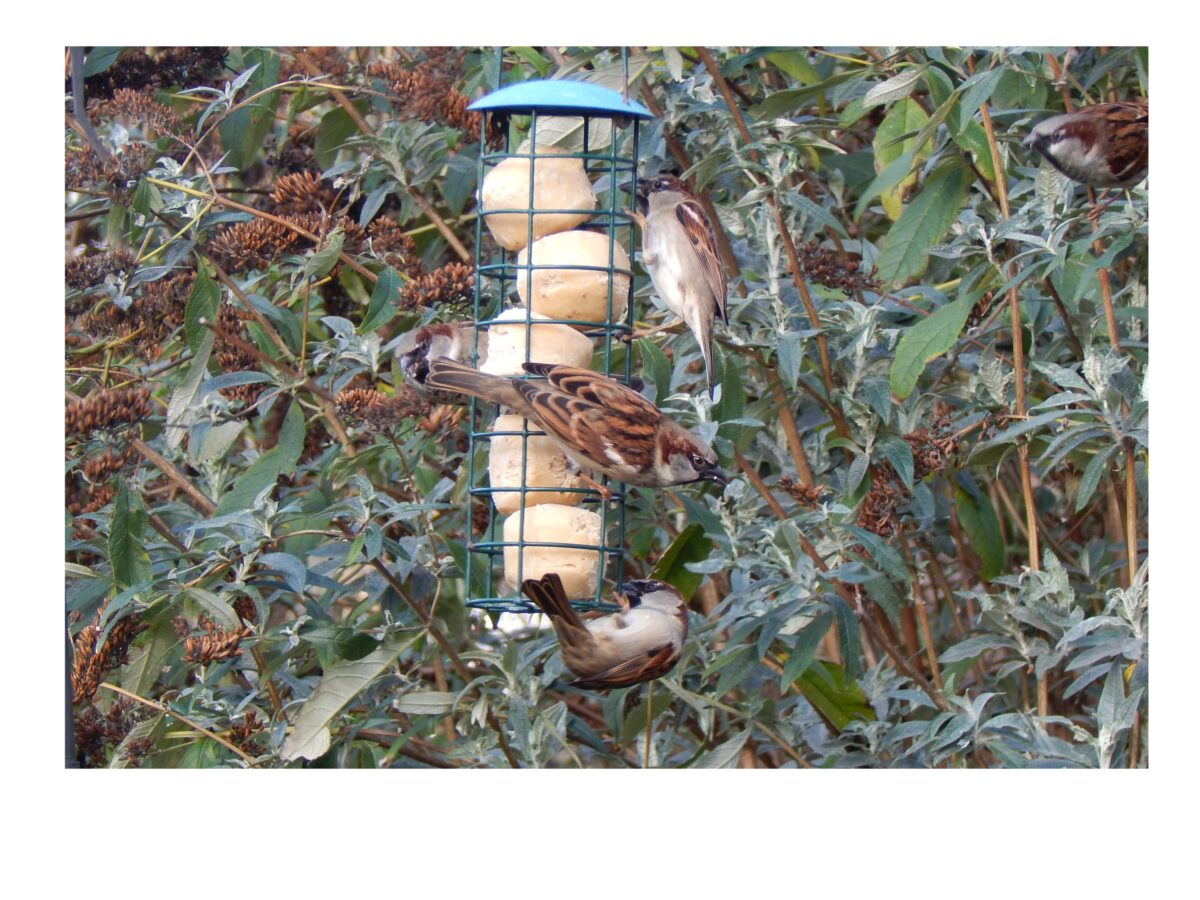
We both came in at 8.30 on a cold January morning, 6 degrees, to count birds. There was a wind too, making it feel colder. We had come in before the garden was open. The RSPB Big Birdwatch rules are one hour over this weekend. 8.45 to 9.45 am was our hour.
It felt even colder as bird watching you have to stay still so as not to disturb them. Whereas trying to keep warm, you need either motion or a blanket. The latter was a thought on the job, too late to do anything about.
We had coloured pictures of the most likely birds. It didn’t include parakeets and we got a few of them, but they weren’t on the chart. Whether we like them or not, they are here and not going away, so in my opinion they should have included them.
The birds have to alight on the garden to be counted. It could be the ground, on a tree or bush, or a feeder. But not merely flying over. I saw most at the feeders. This time of year birds must eat a lot; small birds like wrens need to eat their own weight in insects or berries daily to survive in winter. Or they will freeze to death. 80% of wrens won’t survive a cold winter. 50% of slightly larger birds like the tits will die too. These are deadly statistics. Survival is certainly helped by garden feeders. Some of ours have seeds and nuts and a couple have fat balls. All very nutritious.
This is what I saw in the hour:
9 blue tits
5 coal tits
1 sparrow
1 collared dove
2 great tits
3 wood pigeons
No robins, no blackbirds, gulls or starlings. Blue tits and coal tits are hard to distinguish. The belly of the blue tit is a stronger yellow, but the blue cap and the black cap can be hard to tell in a moving bird, frantic to get at the food in the feeder. Nor could I tell if I was counting the same blue tit twice, as it might have returned a few minutes later. There was lots of noise in the buddleia which was on my patch, probably sparrows but I couldn’t see them to count. At one point, I went and looked at the feeder at the top of the garden, at my approach a flurry of small birds left. Mostly sparrows but there might have been tits too.
It has been a very wet January. The average rainfall for January is 55 mm, but we have had 98 mm, measured on our rain gauge. with still a week to go. That’s hard on birds. Prolonged rain will cause birds to shelter, but this inactivity can lead to hypothermia, added to by the reduced foraging. Consider how we would survive in cold and wet conditions outside without fire and little food, and we are a 1000 times heavier than a sparrow, with more bulk to keep in heat.
We turned one compost bin into another, so we have an empty one. We find too many twigs, not chopped small, so they won’t break down, so simply accumulate year on year. Twigs should be cut back to a few inches soon as a twig goes on the heap, with shears or secateurs. Then, with more surface area, it will break down.
There are lots of hazel catkins in the hazel by the greenhouse, all male. The female catkins are small, coming out of buds, but I don’t see any at all. Well, it is only January, perhaps they’ll appear in a few weeks.