
Yesterday was the garden’s AGM. We looked back on the year’s achievements. These included:
– Increased footfall from 4546 to 5758 over the year.
– Completion of our all-weather shelter, and a side door in the container.
– Two solar panels on the container which we use for lighting and hot drinks.
– Regular income from plant sales.
– The lease of the garden site, owned by the Council, has been extended until April 2029.
– Increased outreach work with schools and various carer groups.
– Continued care of planters on Earlham Grove, Woodgrange Road, and the large bed at the Learning Zone
– Successful events including Benjamin Zephaniah memorial, VE Day commemoration, South Asian story-telling, a Witch’s Tree Walk, Welcoming Spring and Winter events.
– Ukulele classes, the first 10 week session held last year, and the latest on-going.
– Gardening Made Easy classes with the library
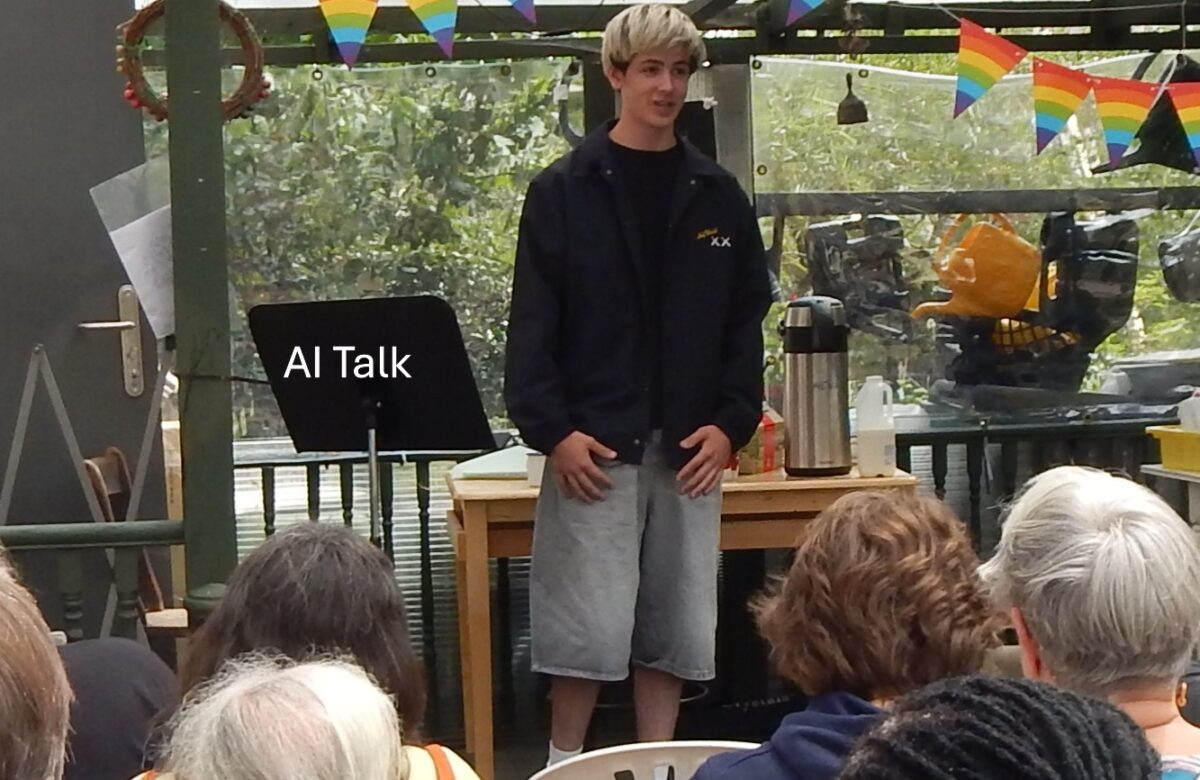
– Sunday talks including Soil Science, Queerness of Gardening, AI friend or foe
Schools that have come into the garden are: Sandringham, Woodgrange Infants, Maryland, Earlham, and Sheringham. Other groups using the garden are: West Ham Lane Health Centre, Newham Carers Community, Newham Arts and Heritage, LGBTQ+ groups.
At the AGM, we discussed volunteers. They are so important to the work of the garden but why do so many sign up but not stay? Several voices said this was common in groups they were involved with. How we might get them to stay? Ideas suggested were: more volunteer days, a tea break at each session, garden hosts taking time to talk to volunteers.
It made me consider why I volunteered. I enjoy nature and especially trees and wild flowers. The garden is only three minutes away. Getting bored one day, I started to write the blog, that was back in 2018, and I have done it ever since. I have made friends with other volunteers. I enjoy our events, and how they bring lots of people into the garden. Myriad reasons why I am still here.
We also discussed hosting at the AGM. How can we get more hosts. A host is the one in charge at any session, responsible for opening up and closing, for talking to visitors, dealing with any problems, and working with other volunteers. So how do we upscale from volunteer to host? It takes confidence to be a host, and certain people have it through their jobs, such as teachers. Also some gardening knowledge is important. Which is quite a lot to ask. It was suggested a buddying system would be useful to help build confidence and a stock of garden knowledge.
AI, Friend or Foe was today’s talk by Henry Dampier. He had six pages of notes, and asked ChatGPT to summarise them in two paragraphs. This is what it gave him:
Artificial Intelligence means making machines smart – like teaching them to learn, understand and make decisions just like humans do. It shows up in everyday life: like when your phone suggests words. Netflix recommends shows, or apps like EarthSnap identify plants with a photo. A special type of AI called Large Language Model, like ChatGPT, is trained on huge amounts of text to understand and generate language – it’s like a super reader that can write, translate, and answer questions. These models work by spotting patterns in how we use words and predicting what comes next, which is how they talk so naturally. Tools like Google Translate, RoomGPT, and educational chatbots are powered by this kind of AI.
But AI isn’t perfect. It can make mistakes (called hallucinations) by confidently giving wrong answers, and it doesn’t fully understand tone, context or common sense. There are also risks like bias in data, overuse harming creativity, and big environmental costs – like needing loads of electricity and water to run. That said, AI can be used wisely: to help doctors diagnose disease, assist students with learning, create music or art, and even help scientists talk to whales! Like any powerful tool, the key is to learn how it works, be aware of its limits and use it responsibly. Don’t fear it – understand it.